
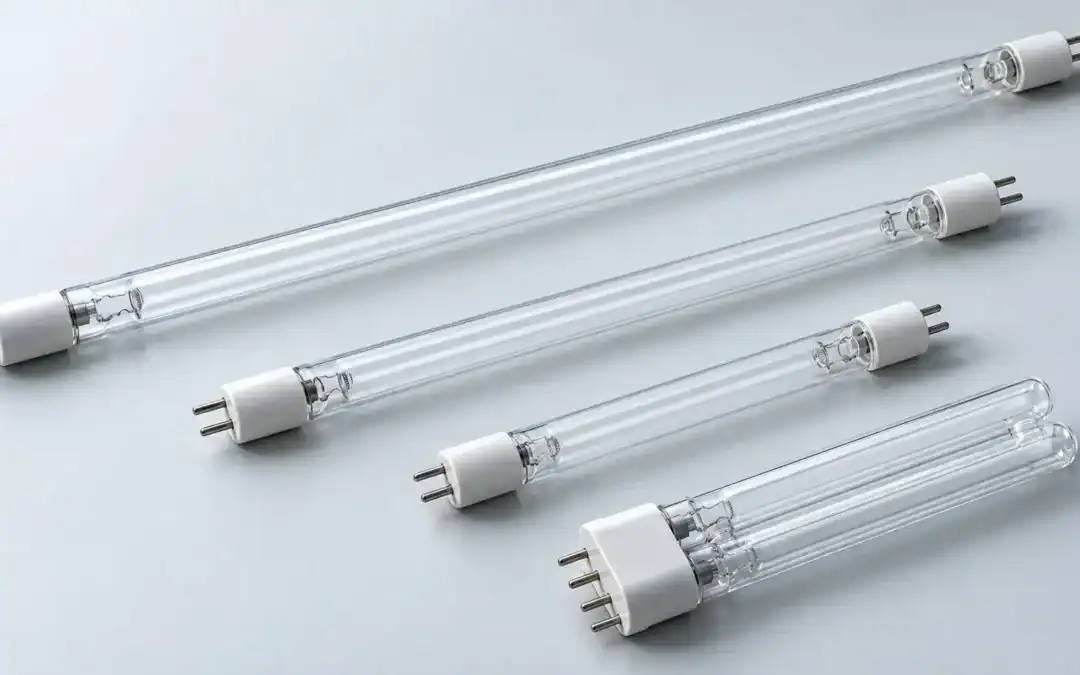
Choosing a UV lamp is not simply a case of finding one that looks the right size. UV lamp wattage, physical dimensions, lamp base, UV output and compatibility with your existing equipment all need to be considered.
Whether you are replacing a lamp in a water treatment system, pond filter, air purification unit or another UV-C installation, selecting the wrong specification can result in poor performance or a lamp that simply does not fit or operate correctly.
This guide explains what UV lamp wattage means, how wattage relates to lamp size and why checking the full specification is essential before ordering a replacement.
For a broader overview of UV lamp selection, read our UV lamp buying guide.
What Does UV Lamp Wattage Mean?
UV lamp wattage is the electrical power consumed by the lamp and is normally expressed in watts (W).
You may encounter UV lamps rated at 11W, 15W, 25W, 30W, 36W, 55W, 75W, 95W and many other wattages, depending on the lamp design and application.
However, wattage should not be confused with UV output.
A lamp’s electrical wattage tells you how much electrical power it is designed to use. Only part of that power is converted into ultraviolet radiation. Therefore, two specifications that are particularly important are:
- Lamp wattage – the electrical power rating of the lamp.
- UV output – the amount of useful ultraviolet radiation produced.
When replacing an existing lamp, wattage is nevertheless one of the first specifications you should check because the lamp must be electrically compatible with the system and its ballast or control gear.
Explore ELC Lamps Online’s full range of UV Lamps to compare different options.
Does a Higher UV Lamp Wattage Mean Better Performance?
Not necessarily.
It can be tempting to assume that a higher-wattage UV lamp is automatically a better or more powerful replacement. In practice, the correct lamp is the one designed for your particular system.
For example, replacing a 25W lamp with a higher-wattage lamp is not advisable simply because you want greater UV performance. The ballast, lamp holder, physical dimensions and other components may have been designed specifically for a 25W lamp.
Installing an incompatible lamp can prevent the system from operating correctly and may potentially damage components.
For UV-C applications such as water treatment, performance can also depend on factors including UV output, exposure time, water flow, lamp condition and the cleanliness of the quartz sleeve.
The key rule is simple: match the lamp to the manufacturer’s system specification rather than choosing by wattage alone.
How Does UV Lamp Wattage Relate to Lamp Size?
Wattage and physical size are often related, but they are not interchangeable specifications.
Linear UV lamps are available in numerous lengths, diameters and configurations. Lamps with different wattages may look surprisingly similar, while lamps with the same or similar wattage may use different bases or dimensions.
For example, ELC Lamps Online currently stocks UV-C lamps across a broad wattage range from leading manufacturers. A LEDVANCE UVC 25W G13, for instance, is rated at 25 watts, measures 450mm in length and uses a G13 base.
This illustrates why wattage alone is not enough information to identify a replacement.
UV Lamp Size: What Measurements Should You Check?
Before ordering a replacement UV lamp, compare the specification of your existing lamp or UV system with the replacement.
1. Overall Lamp Length
Measure or verify the lamp’s specified overall length.
This is particularly important when the lamp needs to fit inside a quartz sleeve or a fixed UV chamber. Even a relatively small dimensional difference may make a lamp unsuitable.
2. Lamp Diameter
Check the tube diameter as well as the length. UV lamps are manufactured in different tube formats, and similar-looking lamps are not necessarily interchangeable.
3. Base or Cap Type
The lamp’s electrical connection must match the equipment.
Depending on the UV lamp, you may encounter bases and fittings such as G5, G13 and specialist multi-pin configurations. Always compare the complete base specification rather than relying on appearance.
4. Pin Configuration
Check both the number and arrangement of the pins. Two lamps with similar wattages and lengths can still have different electrical connections.
Why the Correct Wattage Matters for UV Ballasts
A UV lamp and its ballast work as part of an electrical system.
The ballast regulates the electrical conditions required to start and operate the lamp. This means a lamp should be matched to compatible control gear rather than selected independently.
When replacing a UV lamp, check:
- Lamp wattage
- Lamp type
- Ballast compatibility
- Voltage/system specification
- Base and pin arrangement
- Manufacturer’s recommended replacement
If a new lamp does not operate correctly despite matching the old lamp’s dimensions, the ballast or another electrical component may also need inspection.
Comparing UV Lamps by Wattage and Brand
ELC Lamps Online supplies UV lamps from established manufacturers, giving customers a choice of specifications for a wide variety of installations.
The Osram UV Lamps range includes multiple wattages and configurations for UV-C applications. Current options include Osram Puritec lamps at wattages such as 11W, 15W, 16W, 25W and 30W, alongside higher-powered models.
You can also browse LEDVANCE UV Lamps, with current UV-C options including 15W, 25W and 30W models.
The important point is that brand and wattage are only part of the specification. Always confirm the complete lamp reference and compatibility before purchasing.
How to Find the Correct Replacement UV Lamp
If you already have a UV system installed, the easiest starting point is usually the lamp you are replacing.
Look carefully for a manufacturer name, product code and wattage printed on the lamp. If these markings are no longer readable, check the system itself for a model number or consult the equipment documentation.
A useful replacement checklist is:
- Manufacturer
- Lamp/product reference
- Wattage
- Overall length
- Tube diameter
- Base or cap
- Number and position of pins
- Required wavelength
- Compatible ballast
- Intended application
Avoid choosing a replacement purely because its physical dimensions look similar.
For more advice about replacement intervals and selecting a compatible lamp, read our guide to how often you should replace a UV lamp.
Common UV Lamp Wattage Mistakes to Avoid
One of the most common mistakes is assuming that more watts equals better UV performance. Your equipment is designed around particular electrical and physical specifications, so installing a higher-wattage lamp is not an automatic upgrade.
Another mistake is matching wattage while overlooking dimensions. Two lamps marked 25W, for example, are not necessarily interchangeable.
You should also avoid selecting a lamp solely by length. A similar-sized lamp could have a different wattage, base, pin configuration or electrical requirement.
Finally, don’t wait until a UV-C lamp stops producing visible light before considering replacement. Effective UV output can decline during use even though the lamp still appears to be operating.
Choosing the Right UV Lamp Wattage: A Quick Checklist
Before placing an order, ask yourself:
- Does the wattage match the original lamp specification?
- Are the lamp length and diameter correct?
- Does the base or cap match?
- Is the pin configuration identical?
- Is the lamp compatible with the existing ballast?
- Does it produce the required UV wavelength?
- Is it suitable for the intended application?
- Have you checked the full product reference?
If all of these specifications match the requirements of your equipment, you will be in a much better position to select the correct replacement.
Find the Right UV Lamp at ELC Lamps Online
Understanding UV lamp wattage is an important part of choosing a replacement, but wattage should always be considered alongside physical size, fitting, UV output and electrical compatibility.
 ELC Lamps Online supplies an extensive selection of specialist UV lamps for water treatment, air purification, surface disinfection and other UV applications, including options from leading manufacturers such as Osram and LEDVANCE.
Browse our complete range of UV Lamps or contact ELC Lamps Online for help identifying the correct lamp for your equipment.
Need a replacement? Check the reference printed on your existing UV lamp and compare the wattage, dimensions and base before ordering. If you’re still unsure, contact the ELC Lamps Online team for technical assistance.
Frequently Asked Questions
1. What does UV lamp wattage mean?
UV lamp wattage refers to the electrical power consumed by the lamp during operation. It helps identify compatibility with your UV system, but wattage alone does not determine UV output, effectiveness, lamp size, or overall performance.
2. How do I choose the correct UV lamp wattage?
Check the wattage specified on your existing lamp, equipment label, or manufacturer documentation. Always match the recommended wattage alongside lamp dimensions, base type, pin configuration, wavelength, and ballast compatibility to ensure safe and reliable UV operation.
3. Does a higher wattage UV lamp provide better performance?
Not necessarily. A higher wattage UV lamp may produce greater output, but your system must support it. Using an incompatible wattage can cause operational problems, so always follow the equipment manufacturer’s recommended lamp specification for replacement.
4. Are UV lamps with the same wattage interchangeable?
No. UV lamps with identical wattage ratings can have different lengths, diameters, bases, pin configurations, wavelengths, and electrical requirements. Always compare the complete lamp specification and product reference before purchasing a replacement for your UV system.
5. How can I find the size of my UV lamp?
Check the product reference printed on your existing lamp and review its technical specifications. You can also measure the overall length and diameter, then confirm the base, pin arrangement, wattage, and required compatibility with your equipment.
6. When should I replace my UV lamp?
Replacement intervals vary depending on lamp type, operating hours, application, and manufacturer recommendations. UV output can gradually decline while the lamp remains illuminated, so follow the specified replacement schedule to maintain effective and consistent UV system performance.